Off-Grid Solar Solutions
Standalone solar with battery storage (BESS) for homes, farms, and facilities where grid power is absent, unreliable, or available only a few hours a day.
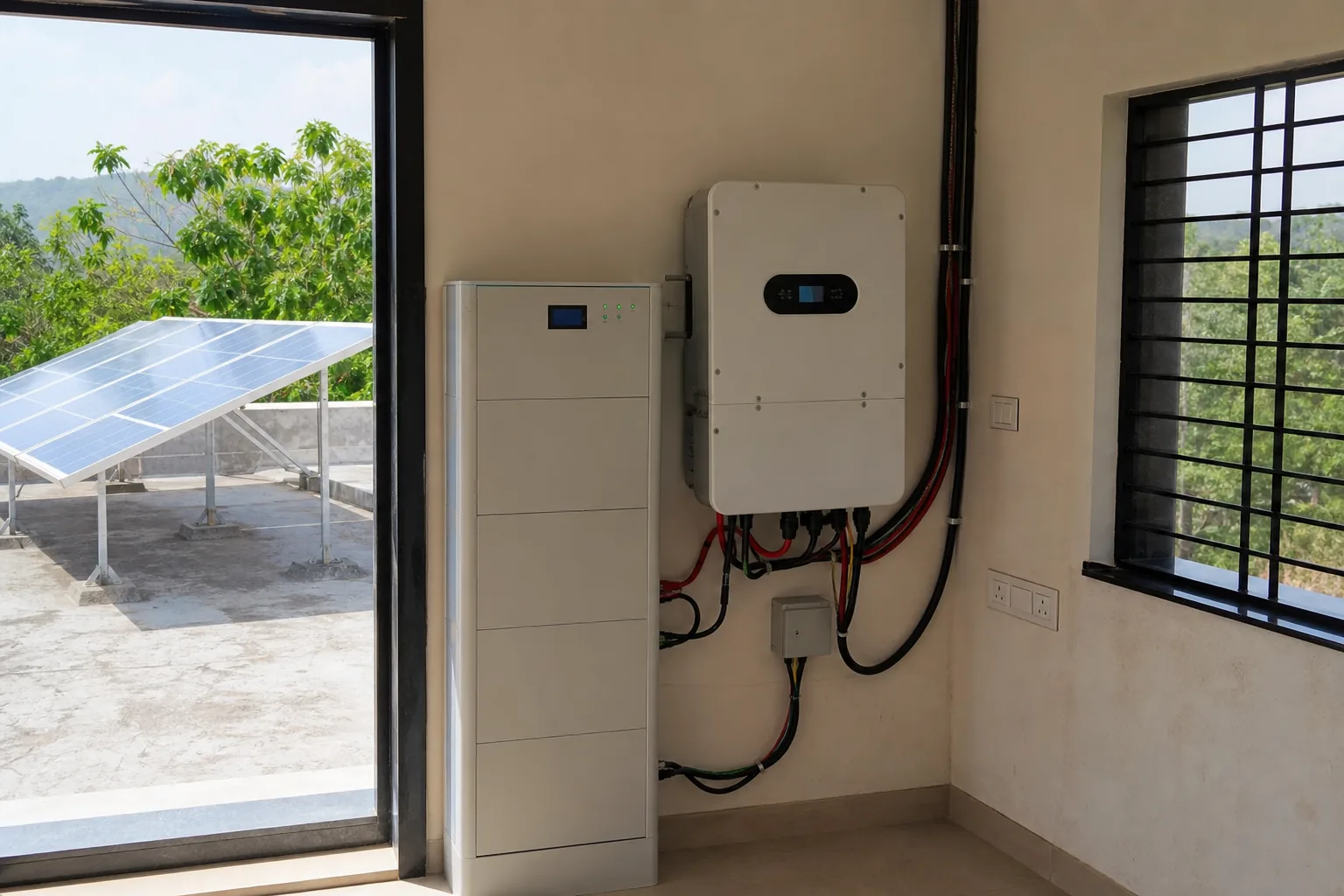
Solar That Works Without the Grid
An off-grid solar system produces and stores electricity independently of the public utility network. Panels generate power during the day; batteries (BESS) keep essential loads running at night and during low-sun periods.
This approach is recommended where electricity is unavailable, highly unreliable, or limited to a few hours a day. Final design, battery size, and expected backup duration are confirmed only after a site and load assessment.
When Off-Grid Makes Sense
Typical situations where a standalone system with battery storage is considered — feasibility depends on load, site, and autonomy requirements.
No Grid Access
Remote homes, farms, and sites where a utility connection is unavailable or impractical.
Frequent Power Cuts
Urban and semi-urban properties that face extended or daily outages.
Night & Backup Power
Homes and facilities that need stored solar energy after sunset and on cloudy days.
Homes & Villas
Independent houses needing 24/7 backup for lighting, fans, and essential appliances.
Farms & Agriculture
Irrigation, cold storage, and farm operations where diesel or unreliable grid power is costly.
Commercial & Remote Sites
Warehouses, processing units, and facilities that cannot depend on uninterrupted grid supply.
Off-Grid vs On-Grid vs Hybrid
We recommend a configuration only after assessing your grid reliability, load profile, and site conditions.
On-Grid
Connected to the DISCOM grid. Surplus generation can be exported via net metering where applicable. Eligible for PM Surya Ghar subsidy for qualifying residential rooftops. Best where grid supply is stable.
Off-Grid
Not connected to the grid. Relies on battery storage (BESS) for backup through the night and outages. Essential where the grid cannot ensure supply. Not eligible for PM Surya Ghar subsidy.
Hybrid
Combines solar, battery, and grid connection. Can use stored energy during outages while remaining grid-tied for daytime offset. Suitability depends on site assessment and local regulations.
PM Surya Ghar subsidy applies to eligible grid-connected residential rooftop systems. Off-grid systems are designed around battery backup and are suited to sites where grid connection is unavailable or unreliable.
What's Included in an Off-Grid System
Component selection and capacity are sized to your daily load and required backup duration.
Solar Panels
High-efficiency modules sized for your daily energy use and autonomy requirements.
Battery Storage (BESS)
Lithium-ion battery banks store excess daytime generation for night use and cloudy-day backup.
Off-Grid / Hybrid Inverter
Converts DC to usable AC power and manages energy flow between panels, battery, and load.
Charge Controller & MPPT
Regulates charging, protects batteries, and maximises solar harvest.
Mounting & Electrical
Structures, cabling, combiner boxes, earthing, and safety accessories.
Professional Commissioning
Design, installation, testing, and handover with documentation.
Battery Storage Powers Off-Grid Autonomy
In off-grid solar, the battery is the backbone of the system. During sunshine hours, panels power your load and charge the battery. Stored energy runs your home or facility at night and during periods of low solar output.
- Sized for load profile, autonomy days, and depth of discharge
- Lithium-ion (LFP) batteries for longer life and reliable performance
- Supports critical loads, appliances, and operational equipment
- Can be expanded or integrated with hybrid configurations where applicable
How We Size Your Off-Grid System
We do not recommend a fixed kW or battery size without understanding your load. Capacity is determined through a structured assessment of usage and backup needs.
- Daily energy consumption and peak load
- Critical vs non-critical loads
- Required autonomy (hours or days of backup)
- Available rooftop or ground installation area
- Shading, orientation, and seasonal solar resource
- Existing electrical setup and expansion plans
Final panel capacity, battery bank, and expected backup duration depend on site conditions and approved design — confirmed only after assessment.
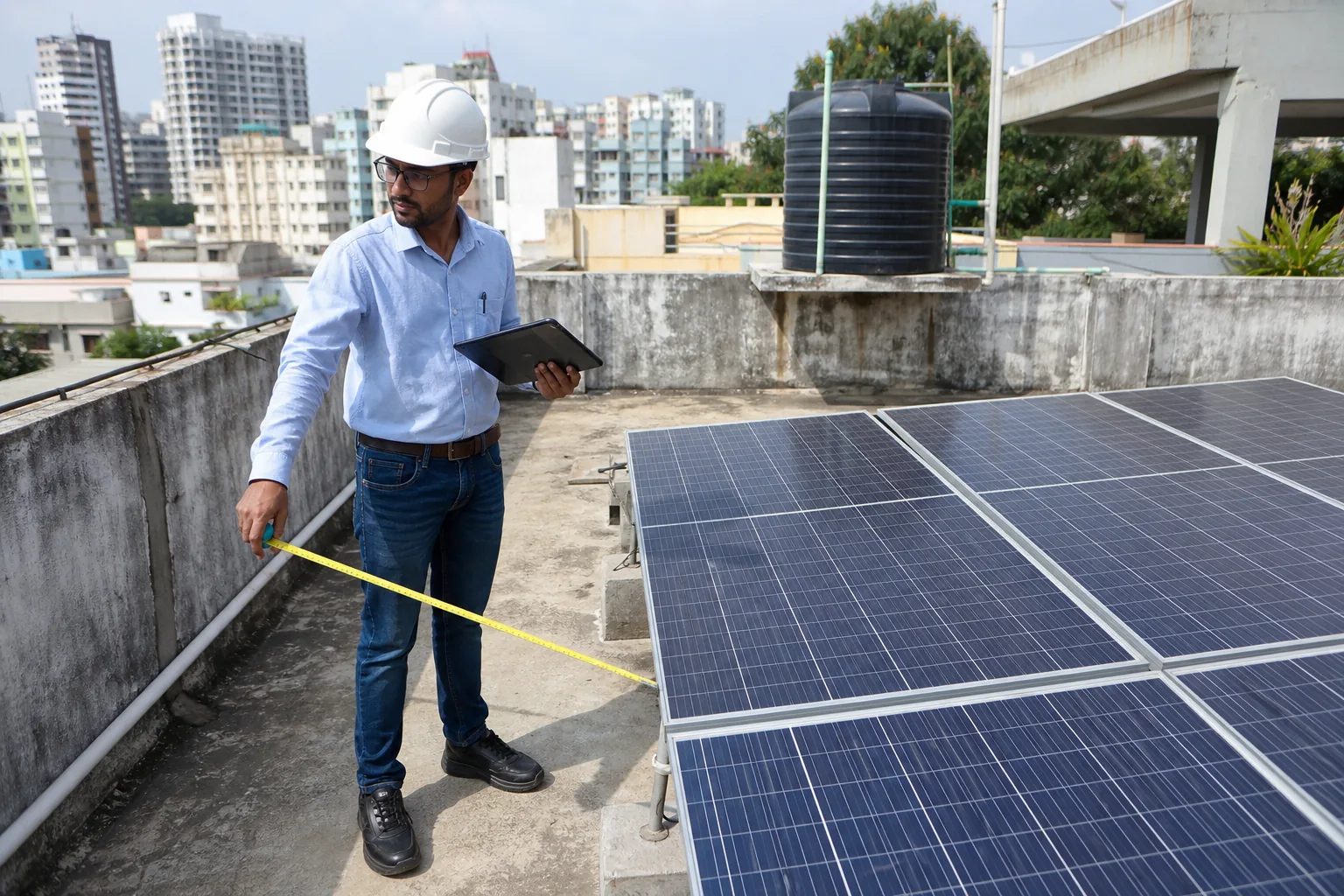
Off-Grid Solar Process
Consultation
Share your load, outage pattern, and backup goals with our team.
Site Survey
On-site review of installation area, shading, structure, and electrical setup.
Load & Autonomy Design
Customized panel, inverter, and battery sizing based on assessed demand.
Documentation
We prepare the paperwork required for project execution and handover.
Installation
Professional mounting, wiring, battery placement, and system integration.
Testing & Commissioning
Safety checks, charge-discharge verification, and performance confirmation.
Handover & Support
Operating guidance and ongoing assistance to keep the system performing as designed.
Why Saffron Eco Power
Load-based design and structured delivery for standalone solar with battery storage.
Load-First Design
Battery and panel sizing follow your actual usage and autonomy needs — not generic packages.
End-to-End Execution
From site survey and design to installation, testing, and handover.
BESS Expertise
Lithium battery storage integrated with panels, inverter, and safety components.
Dedicated Support
Guidance on operation and assistance after commissioning.
Frequently Asked Questions
Common questions about our solutions and process.
Need Reliable Power Without Depending on the Grid?
Share your location and load details — our team will assess feasibility and recommend an off-grid or hybrid approach.
Get a Free ConsultationStart Your Off-Grid Solar Enquiry
Tell us about your site, outages, and backup needs. Our team will review your requirements and schedule a consultation.
Off-Grid Solar Enquiry
Fill in the form below and we'll get back to you within 24 hours.